
Hardware vs. Software Video Wall Controllers: Why Software Is the Future of Control Rooms
Introduction: The Shift Happening in Control Rooms
For decades, control rooms, operation centers, security hubs, and broadcast facilities relied on hardware-based video wall controllers large, expensive, proprietary boxes that required specialized installation and frequent maintenance.
But the market is shifting.
With modern IT infrastructure, AV-over-IP technology, and high performance off the shelf PCs, organizations are searching for more scalable, cost-effective, and future proof solution. This is why searches for software video wall controller have surged in the last three years.
In this guide, we break down the full comparison of video wall controller software vs hardware, explain why hardware is becoming outdated, and show how platforms like Lygos deliver flexibility and savings traditional hardware cannot match.
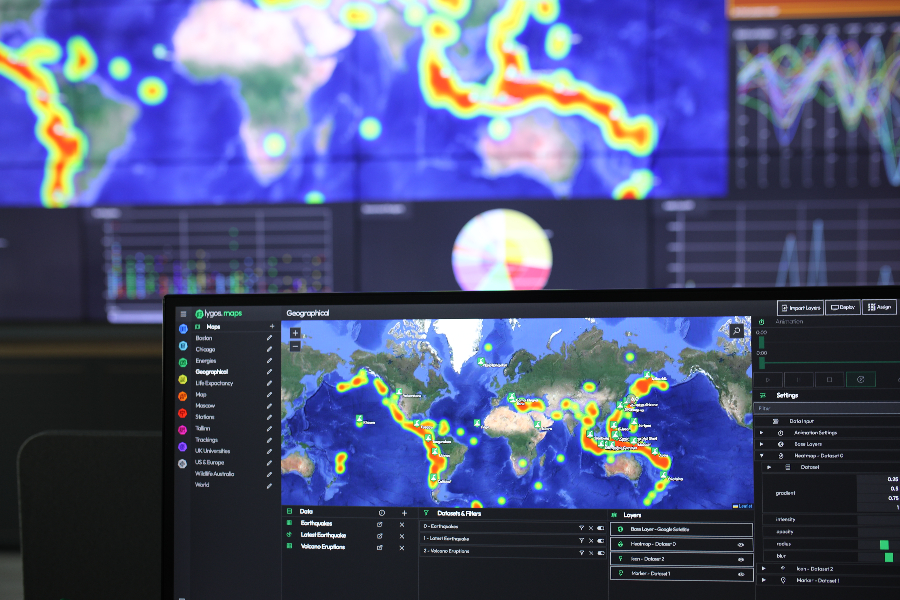
What Is a Hardware Video Wall Controller?
A hardware video wall controller is a rack mounted, proprietary device that captures input signals and distributes them to multiple displays. These usually include:
· Custom GPUs
· Proprietary backplanes
· Specialized input/output cards
· Vendor locked firmware
· Costly expansion modules
Problems with Hardware Controllers
Issue and Why It’s a Problem
High Cost: Usually 3–5x more expensive than software-based systems.
Proprietary Parts: Locked to one vendor with expensive cards or modules.
Low Scalability: Need new hardware anytime you add screens or sources.
Complex Maintenance: Requires technicians, firmware updates, downtime.
Hard to Upgrade: Replacing even one card often means replacing the entire chassis.
Traditional AV integrators still push hardware because it's the “old way” but it's quickly losing ground.
What Is a Software Video Wall Controller?
A software video wall controller runs on standard Windows or Linux computers and uses networking (AV-over-IP) to capture, stream, and render any content on any screen.
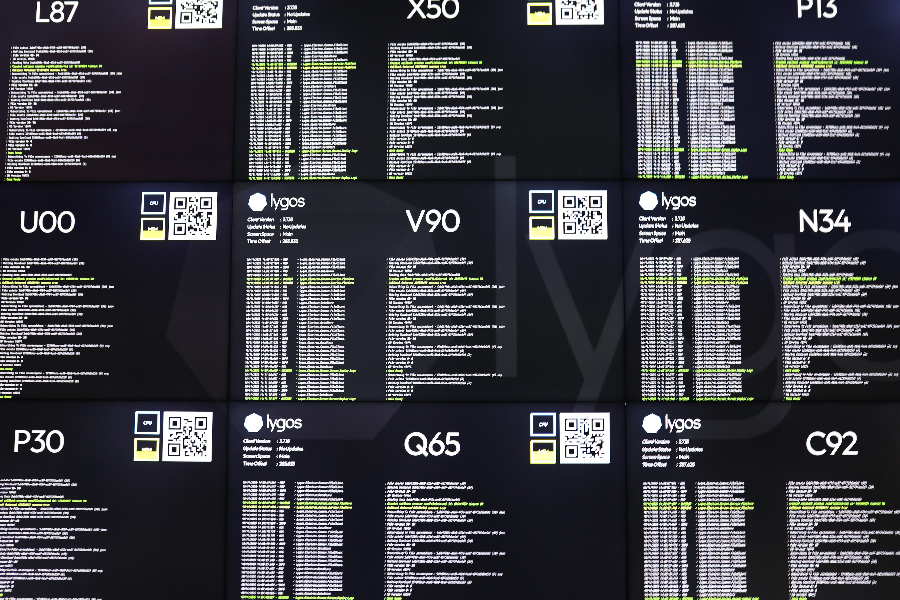
Platforms like Lygos allow users to:
· Create, arrange, and control unlimited visualizations
· Use off the shelf PCs instead of specialized hardware
· Add or remove displays instantly
· Run distributed systems across multiple machines
· Deploy in control rooms, NOCs, SOCs, and broadcast setups
Why Software Wins
Advantage and What It Means
60% Less Cost: Uses common PCs and standard IT equipment.
Hardware-Agnostic: Works with any display, any GPU, any network.
Infinitely Scalable: Add more screens by adding more PCs—no proprietary limits.
Easy Updates: New features roll out through software updates, not hardware swaps.
Future-Proof: Evolves with IT infrastructure instead of locking you into fixed hardware.
Lower Maintenance: IT teams already know how to manage PCs and networks.
Software is not the “cheap alternative.” It is the next evolution of video wall control.
Video Wall Controller Software vs Hardware: The Direct Comparison
Cost Comparison
Hardware:
- $30,000–$150,000 per chassis
- Additional cost for input/output cards
- Expensive maintenance contracts
Software:
- Runs on standard off-the-shelf computers
- 60%+ cheaper to deploy
- Zero proprietary hardware required
Scalability
Hardware: Limited and expensive
To add screens, you must buy:
- New cards
- New chassis
- Sometimes an entirely new controller
Software: Unlimited
Just add:
- Another PC
- Another display device
- Another networked stream
Software grows with your needs, not against them.
Maintenance & Support
Hardware:
- Requires specialized technicians
- Spare parts are costly
- Vendor-dependent for updates and patches
Software:
- Easily updated over the network
- Uses common IT infrastructure
- No physical card failures
- No downtime for hardware swaps
Flexibility
Hardware:
- Fixed inputs
- Fixed outputs
- Fixed layouts
- Hardcoded configurations
Software:
- Drag-and-drop layouts
- Real-time control from PC/tablet
- Multi-user collaboration
- Integrated workflows (data, dashboards, maps, cameras, streaming)
Future Proofing
Hardware: Designed for the past.
As displays evolve (8K, microLED, ultra-wide), hardware controllers quickly become outdated.
Software: Designed for the future
Runs on modern GPUs, network infrastructure, and scalable PC clusters.
Why Software Is Now the Default Choice for Modern Control Rooms
The rise of AV-over-IP, cloud workflows, and distributed visualization systems has changed expectations. IT teams want:
· Hardware agnostic platforms
· Centralized control
· Integrations with analytics, dashboards, and live data
· Remote collaboration
· Security and auditability
Software delivers all of this, hardware simply cannot.
Why Lygos Leads the Software Revolution
Lygos is designed for high performance, mission critical environments requiring:
✓ Real-time synchronization across large screen walls
✓ Distributed rendering across multiple computers
✓ Multi operator control
✓ AV-over-IP compatibility
✓ Support for dashboards, maps, NVRs, CCTV, websites, and data sources
Because Lygos runs on standard PCs, it offers:
- Up to 60% cost reduction
- Infinite scalability
- Rapid updates
- No proprietary equipment
- No vendor lock-in
Lygos becomes part of your IT environment—not a special system that only one company can maintain.
Conclusion: The Future Belongs to Software
Buyers searching for “video wall controller hardware” often don’t realize they’re looking at the old generation of technology.
The truth is simple:
Hardware video wall controllers were built for the past.
Software video wall controllers are built for the future.
With better scalability, lower cost, easier maintenance, and true hardware freedom, modern control rooms, NOCs, SOCs, and broadcast facilities worldwide are switching to software first ecosystems.
If you are planning a new control room or upgrading your existing one, choosing software isn’t just smart it’s inevitable.
Try and discover Lygos now by downloading free trial of Lygos (does not require registration). Check out how is your market powered .